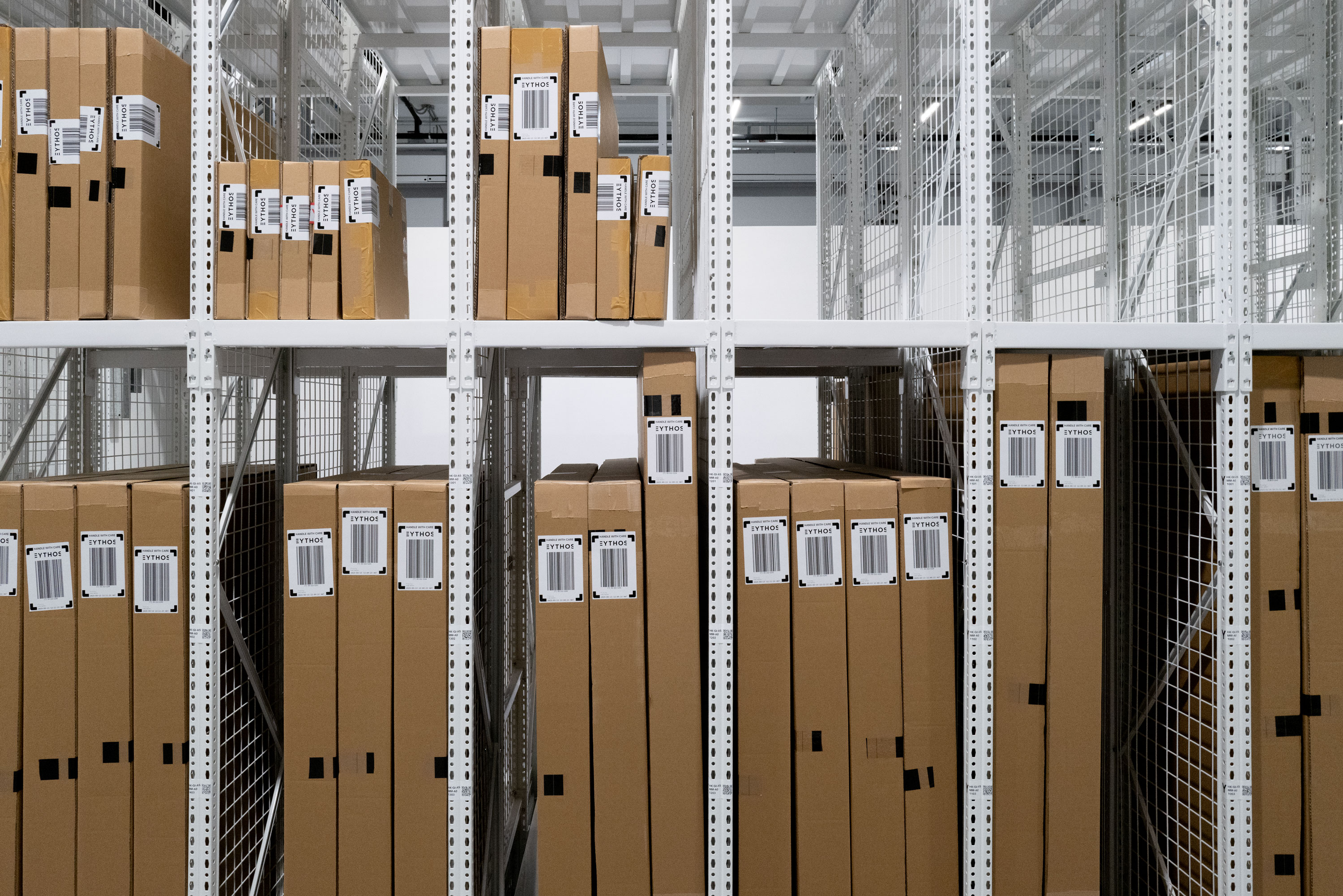
In fine art logistics, conversations often centre on the important carbon footprint related to the miles traveled by ships, planes, and trucks, especially around art fairs seasons. However, a significant portion of an artwork’s environmental impact occurs during its long-term storage. To ensure the longevity of artworks, fine art facilities must provide precise 24/7 climate control and UV protection.
At Eythos, we believe that preservation should not come at the cost of the planet. We have transformed our fine art warehouse from a passive storage space into a high-efficiency, green-powered ecosystem. By integrating high efficient buildings with renewable energy, we ensure that while your collection stays still, our progress toward Net-Zero never stops.
Infrastructure as a foundation for sustainability
Sustainability and energy loss prevention begin with the envelope of the building itself. We have strategically selected facilities that meet the highest international standards for green architecture, ensuring that our energy needs are minimised from day one through superior insulation and intelligent design.
Hong Kong: Our operations are housed in a building that has achieved environmental excellence: LEED Gold, BEAM Platinum, and WELL certifications. To further enhance our facility's sustainability, these certifications are reinforced by the installation of 1,100 solar panels, which feed the local grid with renewable energy.
South Korea: Our Korean hub is located in a building recognised for its high-efficiency systems, carrying LEED Gold certification. This ensures that the structural design itself acts as a silent protector, maintaining thermal stability with significantly less power than traditional storage facilities.
Smart systems, less waste
Maintaining a museum-standard environment, defined for the best conservation of the different assets: General storage, Work on Papers, Sliding racks, Private rooms, Films & Photos, is a delicate balancing act.
Eythos utilises advanced sensors and smart continuous HVAC monitoring, Testo devices, to implement precise climate control. By monitoring the internal environment in real-time, our systems only use the exact amount of energy required to maintain stability. This data-driven approach not only provides a safer environment for art but also eliminates the energy waste associated with over-conditioning empty spaces or responding too late to ambient shifts.
Transitioning to 100% green energy
Eythos's ultimate goal is to separate art preservation from fossil fuels entirely. This move aligns with our broader ESG strategy to lead the region in sustainable logistics. As part of our SBTi "Targets set", we are committed to reducing our Scope 1 and Scope 2 GHG emissions by 90% by 2031, using 2025 as our base year.
A clear roadmap to power our facilities with renewable energy has been implemented, ensuring our facilities are powered by clean energies sourced within the market boundaries aligning with RE100 guidelines.
Hong Kong: Since January 2026, Interlink facility has been powered by 100% renewable energy credits (RECs) purchased exclusively from within market boundaries.
South Korea: We have officially registered our interest on government platforms in South Korea to purchase K-RECs (Korea Renewable Energy Certificates).
Transforming the 'Rest' into a green asset
For collectors and institutions, storing a collection at an Eythos facility is no longer just a logistical necessity, it is a proactive ESG strategy. By choosing a facility powered by renewable energy and housed in LEED-certified infrastructure, clients can significantly lower their own Scope 3 emissions.
We are proving that high-stability art storage doesn't have to be high-impact. Through engineering excellence and a commitment to renewable power, Eythos is ensuring that the artworks of the past are protected by the sustainable technologies of the future.

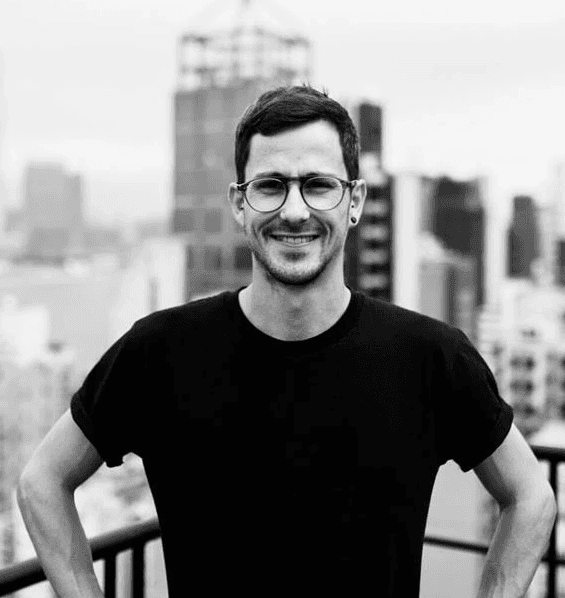
Rudy Bottin
Head of Sustainability
Pioneering sustainable art logistics through continuous innovation, Eythos sets new industry benchmarks for environmental responsibility.
About
Rudy Bottin