One of the most common questions we hear from collectors and galleries is, "Do I really need a custom wooden crate for this, or can we soft pack it?"
It is a fair question. Crating is an investment, and budgets are often tight. However, the decision between soft packing and crating isn't just about cost—it’s about physics, insurance requirements, and, increasingly, environmental responsibility.
At Eythos, we believe that protecting your art shouldn't come at the expense of the planet. Whether we are wrapping a canvas for a crosstown trip or building a fortress for an international flight, our materials are chosen to minimise risk and environmental impact.
Here is how to decide which method is right for your shipment.
Option 1: Soft Packing

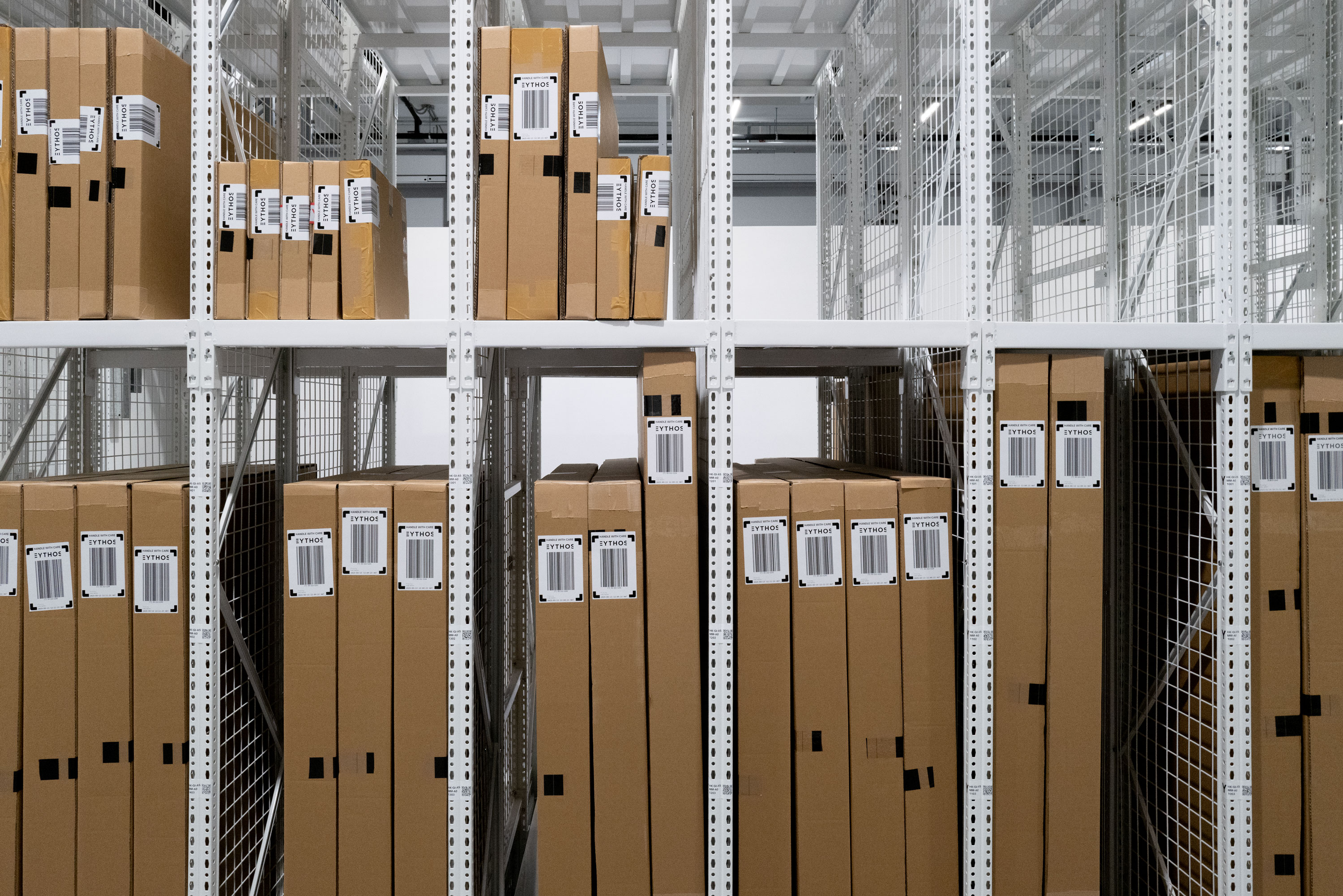
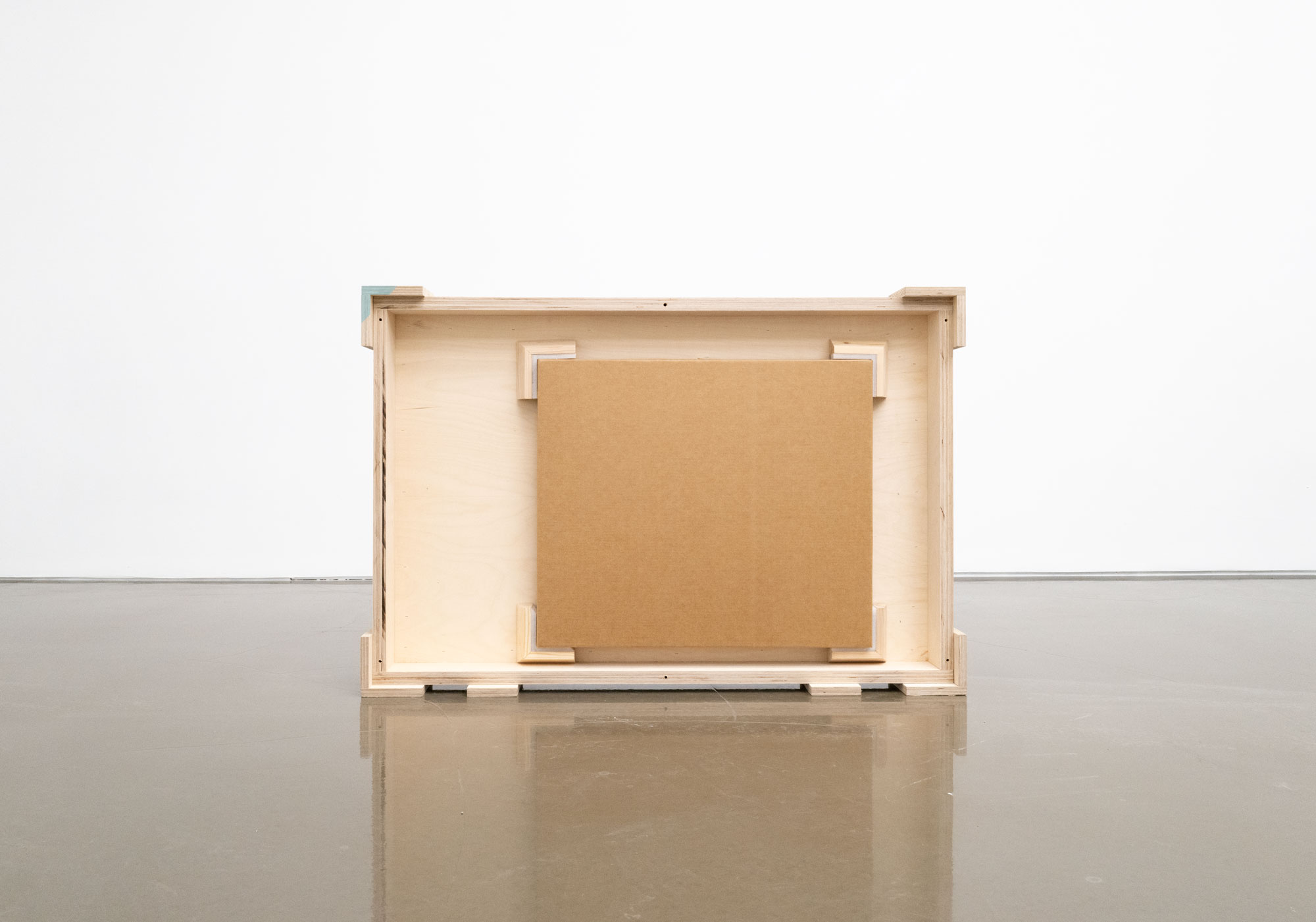
Soft packing (often called a "slipcase" or "shadow box") involves wrapping the artwork in protective layers and securing it within heavy-duty cardboard. It is lighter, faster to produce, and more cost-effective than wood.
When is it safe to use?
Local Transport: The art is moving via a dedicated art shuttle and will not change hands.
Sturdy Mediums: Works on canvas, panel, or framed photographs that do not have fragile protrusions.
Budget Constraints: When the value of the work doesn't justify the cost of a crate, but protection is still needed.
The Eythos Difference: Zero Single-Use Plastic
The industry standard for soft packing is usually layers of plastic bubble wrap and generic cardboard. We take a different approach.
PEFC™ & FSC® Certified Cardboards: We construct our slipcases using cardboard containing 80%+ recycled content.
Plastic-Free Interiors: Instead of standard plastic bubble wrap, we use sustainable cushioning alternatives.
Zero Single-Use Plastic: We have a firm commitment to eliminating single-use plastics from our packing process entirely.
Option 2: Custom Crating
When do you REALLY need it?
International Shipping: If the art is going on a plane or passing through customs, a crate is non-negotiable.
Fragile & High Value: Heavy sculptures, works with glass, delicate antiques, or high-value oils require rigid structural integrity.
Insurance Requirements: Many underwriters will not insure high-value transit unless the work is crated.
The Eythos Crate Menu: 5 Levels of Protection
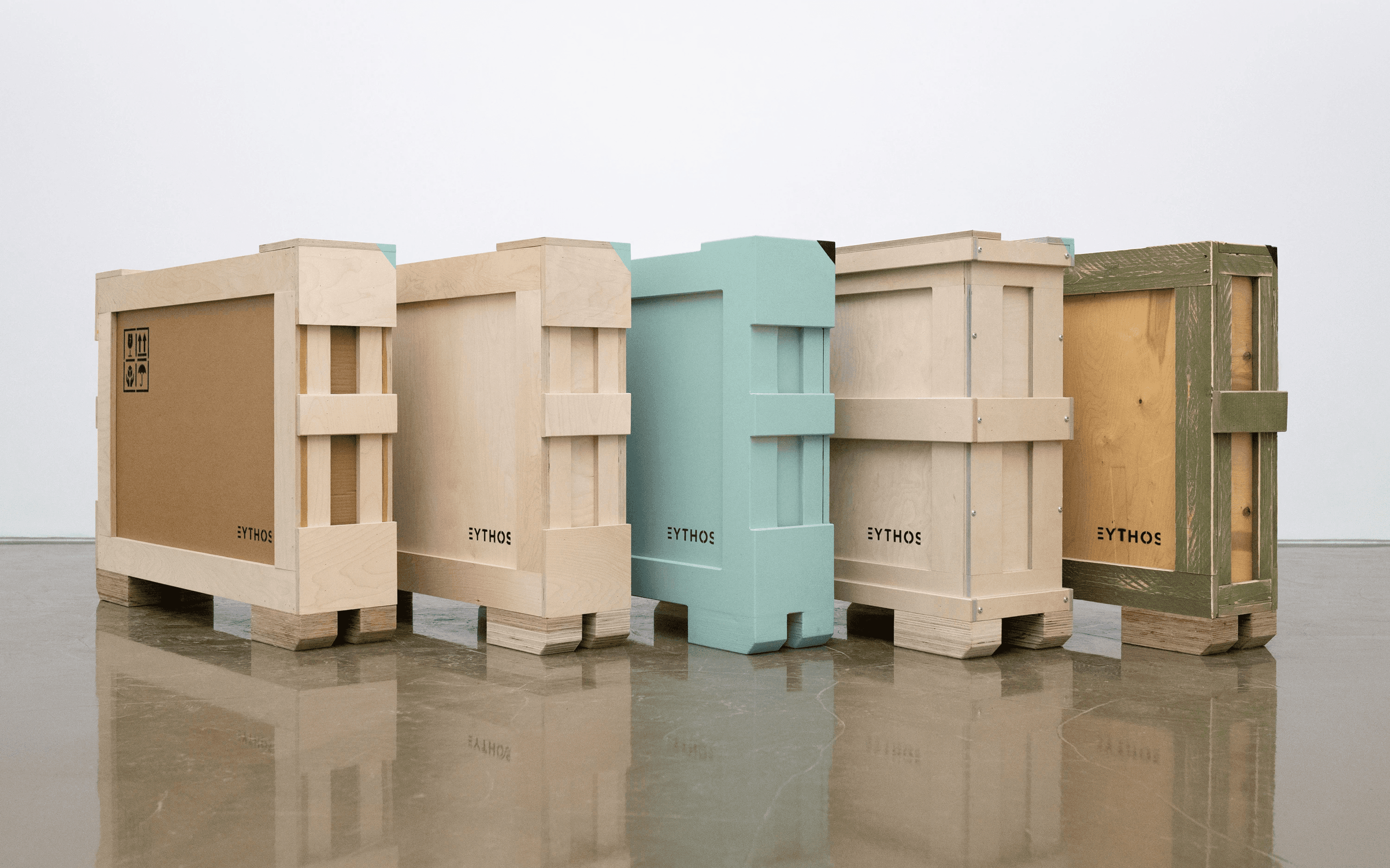
Not all crates are created equal. We offer five distinct tiers designed to match the specific needs of your artwork and your sustainability goals.
Card Crate
Best for art fairs, high turnover cycles, short-term relocations.
Light, efficient, and sustainable. This is a reinforced hybrid of triple-wall cardboard and plywood. It offers the structural shape of a crate but is ultra-lightweight and reusable, saving on freight weight costs.
Standard Crate
Best for general shipping, domestic transport, sturdy storage.
Versatile protection. Adaptable, durable, and aesthetic, this crate combines FSC-certified plywood with closed-cell foam to provide robust protection for the majority of fine art shipments.
Climate Crate
Best for sensitive works (panel paintings, wax), long journeys, unstable climates.
Museum-grade climate control. We engineer this crate with layered thermal insulation and moisture-blocking barriers to keep humidity and temperature stable, regardless of the external weather conditions.
Museum Crate
Best for global museum loans, high-value masterpieces.
Our highest standard. This crate features a "floating" inner shell separated from the outer shell by shock-absorbing foam. It provides superior insulation and vibration dampening for the world’s most valuable pieces.
Recycled Crate
Best for the eco-conscious collector, circular economy initiatives.
A Standard Crate made entirely from repurposed materials. It offers the same protection with minimal impact and maximum purpose.
The Eythos Environmental Standard
Regardless of which crate type you choose, the materials we use to build them are held to the highest ecological standards:
Responsible Wood Sourcing: we exclusively use FSC-Certified Plywood.
Clean Chemistry: where possible we use water-based paints and primers and recycled foams. This prevents harmful chemical off-gassing that can damage sensitive artworks.
Natural Climate Control: standard silica gel is a synthetic pollutant. We use plastic-free desiccant made from natural bentonite clay to manage humidity.
No Fumigation: we enforce a strict no wood fumigation protocol to avoid toxic chemicals.
The Hidden "Scope 3" Benefit
Transporting empty crates and raw lumber creates massive carbon emissions (Scope 3). At Eythos, we prioritise local sourcing for our materials. By procuring our wood and cardboard from local, certified vendors, we significantly reduce the transport-related emissions attached to your shipment before the art even moves.
End-of-Life: Closing the Loop
What happens after the crate is unpacked? In the traditional logistics model, used crates often end up in skips or dumpsters. At Eythos, our wood waste is rerouted to local recycling centres, diverting it from landfill and reinforcing our commitment to waste reduction.
Summary: The Decision Matrix
Card Crate | Standard Crate | Museum Crate | |
|---|---|---|---|
Structure | Cardboard/Ply Hybrid | Plywood/Foam | Double-Shell Floating |
Weight | Low | Medium | High |
Best Use | Art Fairs | General Shipping | High Value/Fragile |
Sustainability | High (Reusable) | FSC-Certified | FSC-Certified |
Unsure which tier is right for your next shipment? Contact the Eythos team. We will assess your artwork's fragility, route, and budget to recommend the safest, and greenest, solution.


Samuel Nieto
Global Head of Execution & Systems
Samuel Nieto is the Head of Standards and Expertise for Eythos.
With a background in Fine Arts and a postgraduate degree in Education, he brings over 12 years of experience as an International Art Handler in key art hubs such as Madrid, Miami, New York, and Berlin—where he spent 11 years working in top contemporary art galleries and artists' studios.
Samuel is dedicated to developing standards, ensuring quality control, and leading training programs that elevate expertise across all Eythos facilities. His commitment to precision and knowledge-sharing helps shape a culture of excellence, ensuring that every project meets the highest industry standards.
More